Shona Mbira Music: A Guide to the Sound and How to Listen
Discover the interlocking patterns of Shona mbira, its place in bira ceremonies and what to listen for in recordings.
By beatbarrow
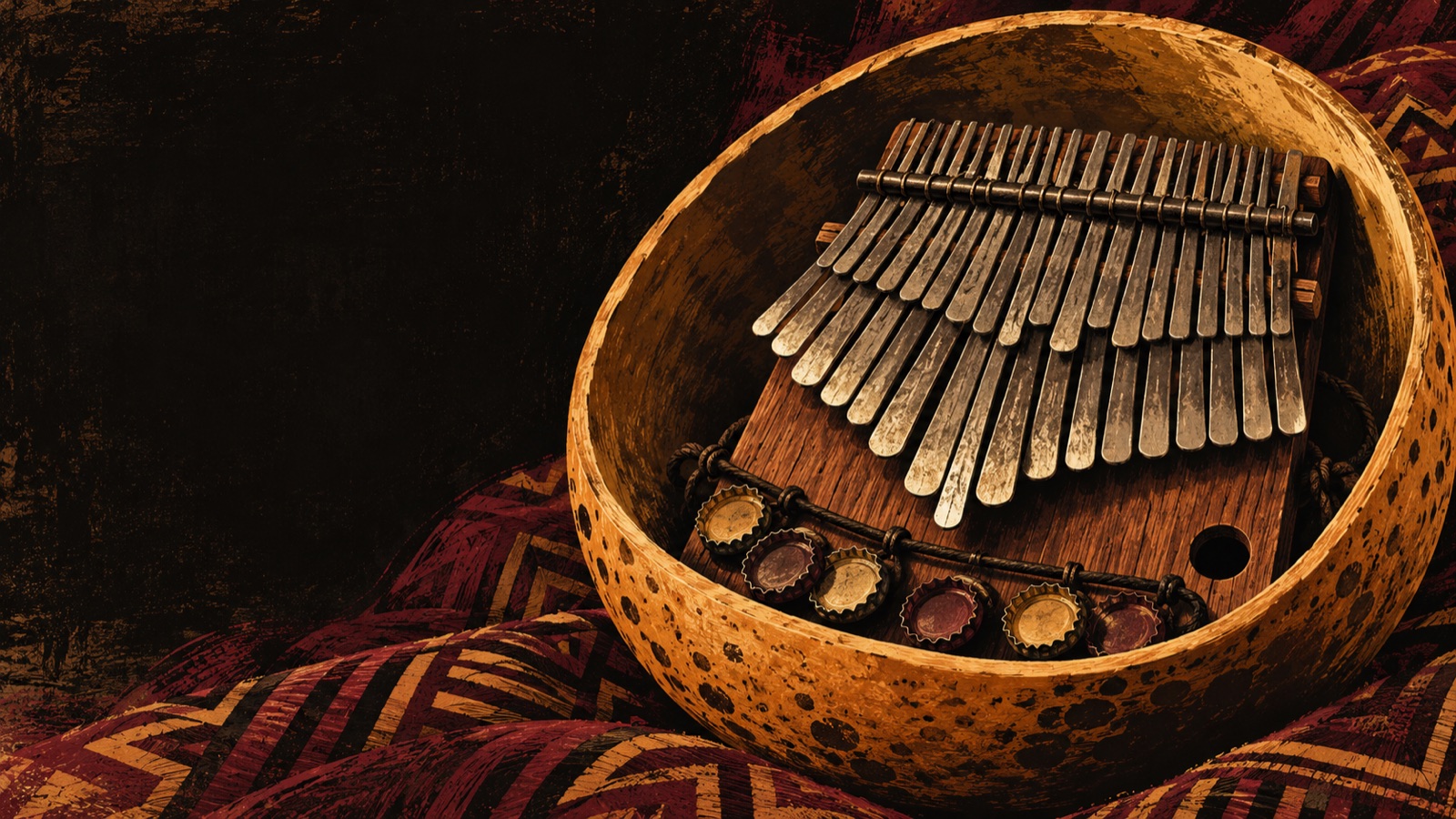
Shona mbira music is built around repeating patterns that can interlock to create a flowing whole. This guide introduces the mbira dzavadzimu, its place in Shona spiritual life, and a few ways to listen more closely.
What is mbira music and where does it come from?
The mbira dzavadzimu is a lamellophone associated with Shona communities in Zimbabwe. It has metal keys mounted on a wooden soundboard, which a player plucks with the thumbs and, often, a forefinger. Its name is commonly translated as ‘mbira of the ancestors’. The instrument is often placed inside a large gourd resonator called a deze. Bottle caps or other rattling materials attached to the instrument or resonator add a distinctive buzz. Tunings and construction vary between instruments and traditions. You can read more about one example in the Grinnell College musical instrument collection.
How do the interlocking parts work?
In many mbira dzavadzimu performances, two players use instruments tuned to match. One plays kushaura, the leading part; the other plays kutsinhira, a complementary part that interlocks with it. The combined sound can reveal melodies and rhythms that are harder to pick out when you listen to either part alone. Rather than waiting for a verse to end and a chorus to begin, listen for the cycle returning. The players can shift emphasis and introduce variations as it turns. Hosho shakers may accompany the mbira and give you another rhythmic layer to follow. Not every mbira recording uses the same line-up. A solo performance, an ensemble and a contemporary fusion can each draw on these ideas differently.
What role does mbira play in a bira?
For some Shona families and communities, mbira dzavadzimu has an important place in a bira: a gathering held to honour and communicate with ancestral spirits, or vadzimu. Music, singing and dancing may continue through the night, and a spirit medium can convey an ancestor’s guidance to the family. Practices vary by family and region. Mbira is also played in other settings, including concerts, community gatherings and recordings. Its ceremonial significance is part of its history; it is not the only way people listen to or make mbira music today. The Grinnell College guide to bira instruments offers more context.
How is the Array mbira different?
The Array mbira is a modern American instrument developed by Bill Wesley. Its notes are arranged differently from those on an mbira dzavadzimu, and models span several octaves. According to Array Instruments, Wesley began developing the design in the 1980s; Patrick Hadley later joined him in making the instruments. Both belong to the wider family of lamellophones, but their layouts, tunings and musical contexts differ. An Array mbira can be used for solo arrangements. Shona mbira dzavadzimu can also be played solo, as well as in the interlocking ensemble tradition described above.
How does mbira relate to kalimba and likembe?
Mbira, kalimba and likembe are names associated with instruments in the wider African lamellophone family. All make sound from plucked tongues or keys, but the instruments and traditions are not interchangeable. Their tunings, layouts, playing techniques and social settings can differ. It helps to use the name of the particular instrument when you know it. The mbira dzavadzimu is one instrument within a much wider family of mbira traditions in Zimbabwe and beyond.
What should you listen for?
Start with the repeating cycle. Pick out a phrase you can follow and listen for where it returns. Then try following a different line: as the parts interlock, your ear may hear a new melody emerge from the same pattern. If hosho is present, tap along with the shaker and notice how the mbira lines sit against it. Listen, too, for the rattle of bottle caps or beads around the clearer plucked notes. That buzz is an intentional part of the instrument’s sound.
Where can you hear mbira music today?
Mbira continues to be played in Zimbabwean communities and by musicians around the world. You can hear it in traditional performances and in recordings that bring mbira into conversation with other styles. On beatbarrow, start with the Mbira genre page. These releases from the catalogue offer places to continue listening; they are not presented as examples of a particular ceremony or playing technique.
A few questions about mbira
How many keys does an mbira dzavadzimu have? Counts and layouts vary by maker and tradition. Instruments commonly have more than 20 metal keys arranged in groups on a wooden soundboard. Can beginners learn? Yes. Learning a repeating part slowly, then hearing how it fits with another part, is one way to begin. A teacher can help with the technique and the particular tuning of an instrument. Is mbira the same as marimba? No. An mbira is a plucked lamellophone; a marimba has wooden bars that are struck with mallets. Both have a place in Zimbabwean musical life, but they are different instruments. Why does it sound different from a piano? Mbira tunings vary, and their intervals need not match the equal-tempered tuning of a piano. The rattling sound from the instrument or resonator adds another texture.
Artwork: AI-generated illustration for beatbarrow.